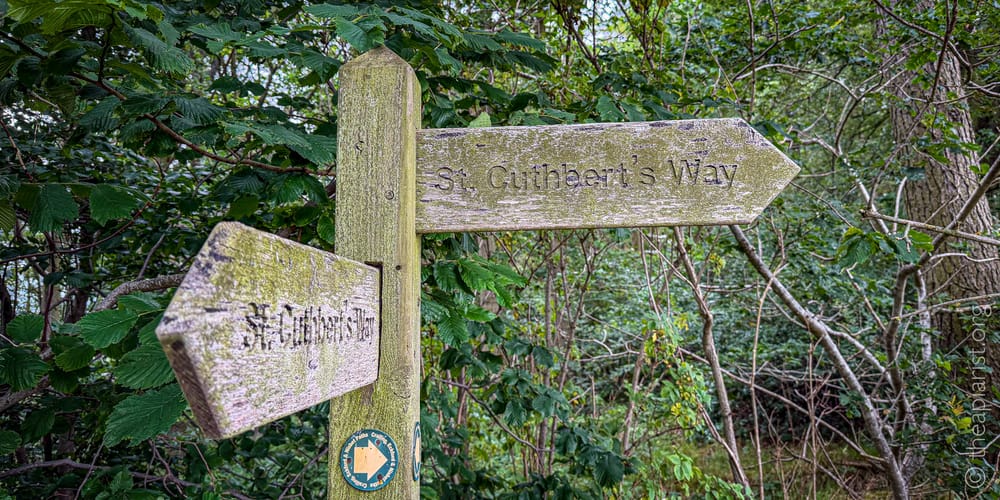
St Cuthbert's Way is a long-distance footpath between Melrose and Lindisfarne. This is one of Scotland's Great Trails, and links Melrose where St Cuthbert started his religious life in 650 AD, with Holy Island (Lindisfarne), his eventual resting place. It's a lovely walk involving a mix of small market towns, stunning countryside, spectacular views and over 1,500 years of history.
The footpath wends its way through rich farmland, along beautiful rivers, down quiet country lanes, and across remote moorland before reaching the coast.
Prizewinning local honey
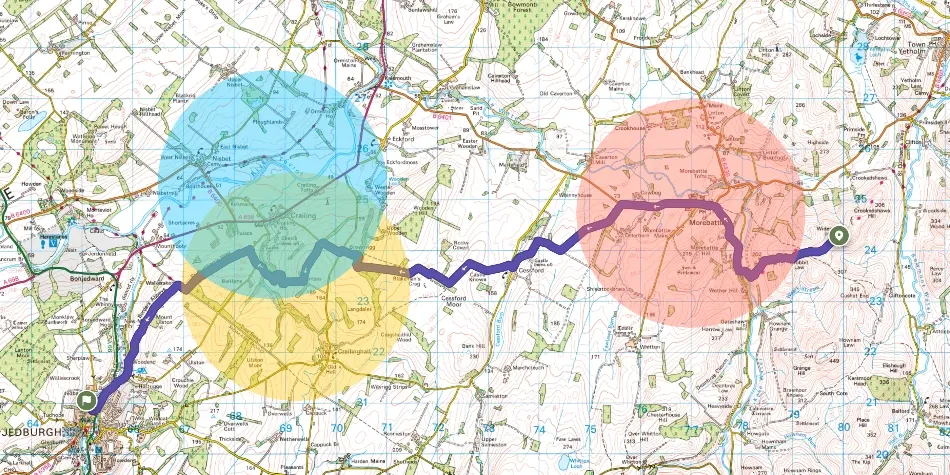
My bees are in apiaries close to St Cuthbert's Way between Jedburgh and Kelso. All are within flying distance (which, for a bee, is about 3 km) of the footpath. Some are sited on the north bank of the River Teviot, others near the tiny hamlet of Crailing, and — within sight of the footpath — just outside Moorbattle. They forage over the rolling meadows, the river floodplain and rich arable farmland.
My spring (soft set) and summer (clear) honey were both placed first in the relevant class in the 2025 Border Beekeepers Honey Show.
Spring honey
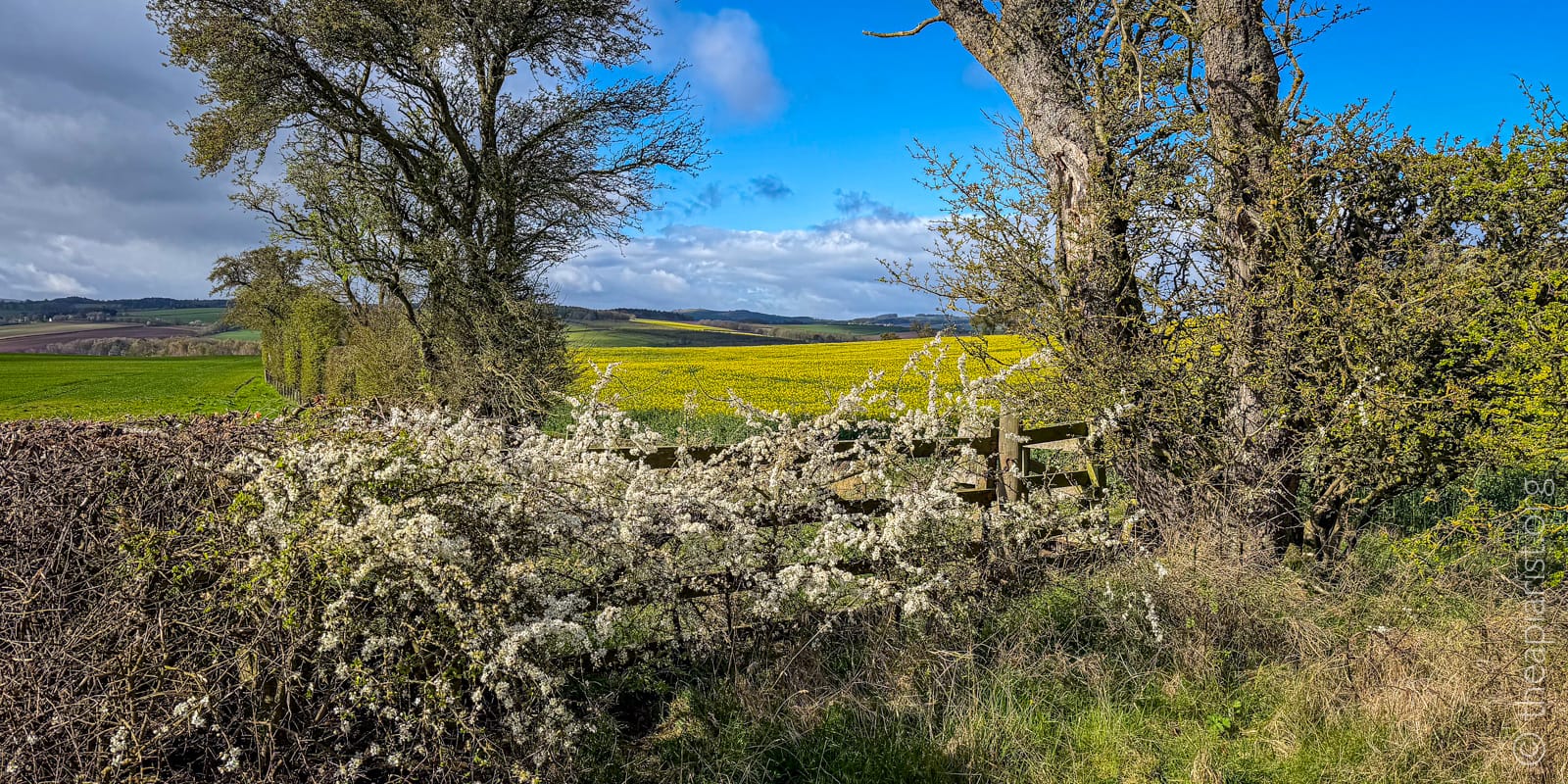
My spring honey is dominated by nectars from the fields of dazzling yellow oil seed rape, and from the abundant sycamore in adjacent woodland. Inevitably, considering the variety of spring-flowering flowers and trees available, there are other nectars included as well. This honey tends to have a high glucose content and so crystallises rapidly, quickly achieving an unhelpful spoon-bending consistency.
To prevent this I manipulate it by 'seeding' it before it sets, mixing it with a small amount of honey with a smooth consistency that is spoonable. The resulting 'soft set' honey is perfect for spreading on toast or crumpets.
In the rare seasons I have surplus heather honey I also produce a 'heather blend' mix of soft set spring honey containing ~15% heather honey. This is delicious, only produced in limited amounts, equally good on toast (or just by the spoonful 😉), and a great choice for those who prefer the distinctive flavour of heather honey, without the strength of the undiluted product.
Spring honey is extracted in early June, and is usually available from July until it is all eaten.
Summer honey
The flowers and trees that produce nectar in the summer months (June until early August) are much more variable, both from year to year, and in different locations. This means that honey produced from apiaries just 2 km apart, even in the same season, might well have a distinctive appearance and flavour.
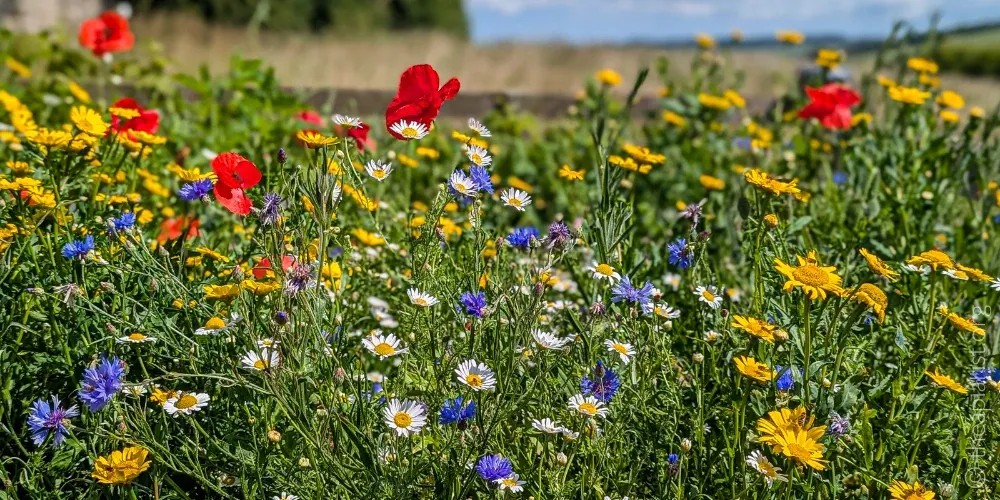
In some years the farmers plant mixed flowers for wild bird food. This is dominated by purple Phacelia which produces a pale-coloured sparkly honey with an excellent flavour.
In other seasons, clover or blackberry or tree nectars dominate, but it's most often a mix of all sorts of different things. Typically, summer honey has a lower glucose content, so is a pourable honey that takes longer to crystallise (though see the note on crystallisation below). It's great for cooking, for sore throats, or with salads or ice-cream.
Or, for that matter, just dipping into when you deserve a treat 😉.
This honey is also perfect for preparing honey glazed walnuts, though you should avoid heating the honey to ensure you don't lose any of the flavour. Once the jar is half-empty, stand it in a bowl of warm water while you chop a handful of walnuts. Add the walnuts to the jar and either stir with a small spoon, or replace the lid and rotate end-over-end until the walnuts are fully coated.
Summer honey is extracted in August, and typically available from September until Christmas, though it is often all gone well before then.
Heather honey
The foothills of the Cheviots have some areas with reasonable amounts of purple flowering heather. If the weather is suitable — enough rain, but not too much, and warm temperatures, but not too hot — I take my bees to a remote site in the moors in the hope of getting some heather honey. It's always a bit of a lottery, and a fortnight of bad weather in August can result in the hives coming back completely empty.
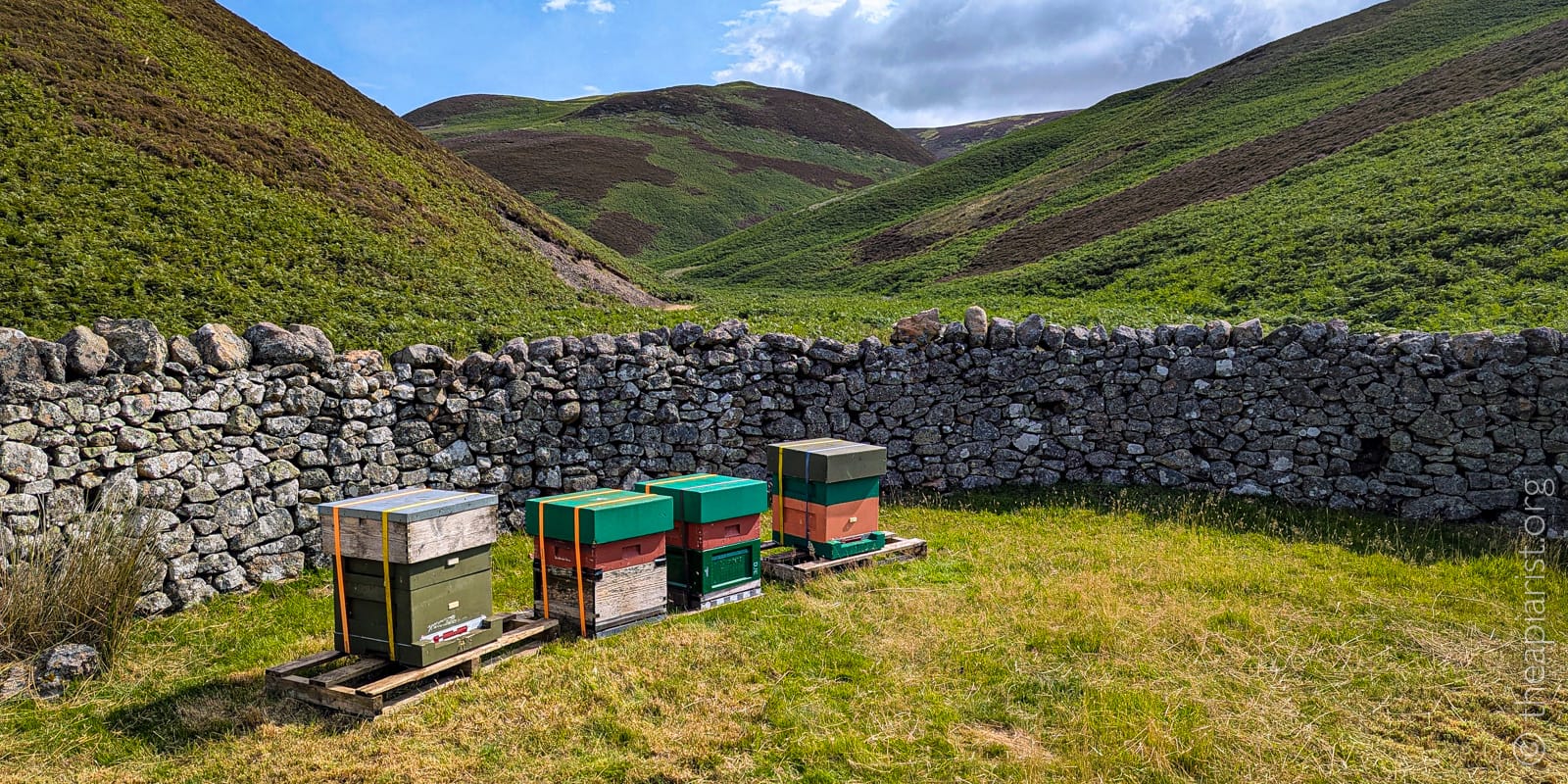
But, in good years, the heather honey is outstanding. Warm, rich, and distinctively flavoured. It is rightly considered the premium honey produced in Scotland, though some consider the flavour is a bit overbearing and prefer a blended honey containing heather instead.
Heather honey is extracted in mid/late-September and there's rarely any left after the first Christmas market.
Crystallisation
All high quality honey will crystallise. This does not affect the flavour at all.
Set, soft set and heather honey is already crystallised, but good quality clear honey will always eventually crystallise, becoming increasingly cloudy and granular. This might take a month, or a year. It depends entirely on the nectar and pollen content.
Supermarket honey does not crystallise because it has been heated and ultra-filtered to remove all small particles, especially pollen, around which crystals form.
My honey contains lots of pollen. I extract the honey using temperatures no higher than occur in the hive (~34 °C), and filter it to remove particles of wax, but nothing else. All the goodness remains in the honey, and the flavour is not spoiled by heating.
If your clear honey crystallises, you can warm it gently for a few hours (a bath of hand-hot water, not more, is a good way to do this … do not use the microwave) and the crystals should gradually disappear.
However, the best way to avoid crystallisation is to eat the honey before it appears 😉.
Availability
St Cuthbert's Way Honey is sold by The JED eYE in Jedburgh.